Salesforce Winter ’26 Part 2: Key Developer Updates You Need to Know
Introduction
If the first part of our Winter ’26 release guide covered LWC and Apex, then this Part 2 is where the platform gets practical. The Salesforce Winter ’26 Release centers on Agentforce, Data Cloud, and platform-level improvements that make AI-driven automation and performance testing easier to adopt.
In plain terms: these updates are built to help teams work faster and with less risk. Below we explain the highlights, give real examples, and finish with clear next steps your company can act on.
Agentforce Monthly Updates — AI That Actually Helps Teams
Agentforce continues to ship monthly updates, and that frequency matters. It means features mature faster and feedback loops are shorter. The Winter ’26 release brings:
1. Agentforce DX, CLI testability, and reuse of Apex
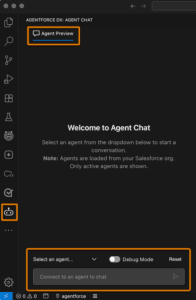
Developers can use Agentforce DX inside Salesforce DX projects. You install the Agentforce DX VS Code extension, use the Salesforce CLI, and gain useful features like:
- Apex debug logging when previewing agents, which writes logs alongside transcript JSON.
- Detailed JSON test outputs that capture which classes and flows were touched.
- CLI commands to activate and deactivate agents.
Practical example: a retail team can convert an existing Apex “loyalty resolver” into an agent action. The agent handles balance checks and triggers targeted offers in Slack or email, without rebuilding backend logic from scratch.
2. Lightning types UI and structured flow outputs
A new setup UI simplifies creating Lightning types for employee-facing agents, and custom agent actions can now return typed objects into Flows. That makes automation predictable and reduces brittle parsing logic.
For marketing teams, this translates to more reliable personalized journeys and fewer manual workarounds.
Data Cloud Monthly Updates — Turning Documents Into Decisions
Data Cloud keeps getting smarter. Winter ’26 introduces Document AI that converts unstructured files into structured schema-driven data. You can let Salesforce auto-generate schemas or design them using a document schema builder.
Other notable updates:
- Federated authentication for zero-copy connectors with Snowflake, BigQuery, and Databricks.
- Web Content Crawler for pulling website content into Data Cloud, useful for Retrieval-Augmented Generation scenarios.
Practical example: event feedback forms and scanned lead sheets become near-real-time inputs for campaign segmentation, not a backlog data team task.
Developer Tools — Faster, Safer, Repeatable Releases
Salesforce CLI improvements include flow testing from the command line and new package push-upgrade commands. Source mobility means safe movement of files in DX projects. Code Builder gains sandbox support and faster startup.
Short takeaway: fewer environment surprises, and development becomes more reliable for teams running CI/CD or frequent releases.
Agentforce for Developers
The default Dev Assistant model has been upgraded to GPT-4o mini, with support for multiple models across selected features. This provides developers with more tailored AI capabilities when building or debugging.
1. Scale Test & Scale Center — Test Before You Launch
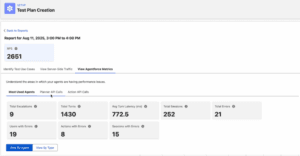
Scale Test now includes a 500GB LDV Partners service for heavy-load certification and a live metrics dashboard. It supports Playwright-based UI load testing and the ability to generate load from GitHub scripts.
Scale Center’s getting a little more hands-on this time. There’s a new way to spot which searches people rarely use, plus a view that highlights SOQL queries dragging performance down.
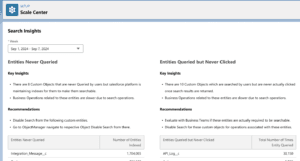
Teams can even run these insights a few times a week instead of waiting for end-of-month reports. Oh, and there’s a handy tie-in with the Customer Success Score Portal so you can jump straight into fixing what you find.
Real scenario: before a big product drop, you can simulate traffic, find a slow SOQL query that would throttle a landing page, and fix it before customers see anything.
ApexGuru Enhancements — Code That Gives Actionable Feedback
ApexGuru now offers on-demand insights up to three times per week, test-case quality checks, platform cache detection for SOQL, and four new antipattern rules (sorting in Apex, inefficient Map creation, manual list copying, loop-based aggregation). This is about reducing technical debt proactively.
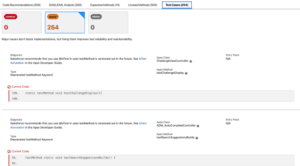
Short takeaway: better code quality, fewer production incidents, and improved developer velocity.
API Updates — Prepare for the SOAP Login Retirement
A critical change: with Winter ’26 (API v65.0) the SOAP login call will no longer work and will return an UNSUPPORTED_API_VERSION error. Versions 31 through 64 will keep login() until Summer ’27, after which the call is retired across all versions.
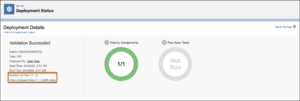
Action item: migrate integrations using SOAP login to OAuth 2.0 or external client-based authentication well before Summer ’27 to avoid downtime. See Salesforce’s official notes for migration steps. (External DoFollow link: Salesforce Winter ’26 Release Notes)
Key Takeaways
- Agentforce moves from prototype to practical: DX, CLI testing, and Apex reuse speed time to value.
- Data Cloud’s Document AI and federated connectors reduce manual toil and streamline personalization.
- Scale Test and Scale Center let you see and fix performance problems before launch.
- ApexGuru gives proactive code guidance tied to sprint rhythms.
- And one heads-up that’s easy to overlook — the SOAP login is officially on its way out.
Why This Matters for Businesses and Consulting Partners
You might be thinking, “Okay, but why should anyone outside IT care about this?” Because this release quietly changes how value gets created day to day.
For consultants, it’s less about flipping features on and more about helping teams build smarter habits — weaving intelligence into the small, repetitive tasks that eat time.
For leadership teams, the shift feels more like progress than disruption. You start with a single process, prove the value, and keep layering improvements. Those small, consistent wins create the kind of trust that no one-off AI project ever could.
What Companies Should Do Next
- Check your integrations. Still using SOAP logins? Line up your OAuth migration before it sneaks up on you.
- Play with Agentforce. Build a tiny pilot — maybe an automated FAQ bot or follow-up message.
- Try out Document AI. Upload a handful of files and see how cleanly it structures the data.
- Run Scale Test before a big campaign. It’s cheaper than a post-launch panic.
- Fold ApexGuru into your code reviews. It’ll catch performance issues long before your users do.
Do one of these every quarter. Learn, tweak, and then scale the ideas that actually save time.
Wrapping Up
At the end of the day, Winter ’26 isn’t about shiny innovation. It’s about the everyday stuff — the smoother launches, the shorter debug cycles, the kind of scalability that doesn’t require heroics. It’s practical progress, and that’s what makes it exciting.
If you want help turning these updates into a roadmap for your org, our team can help. Learn more on The Pinq Clouds blog or dive into the official Salesforce Winter ’26 Release Notes.